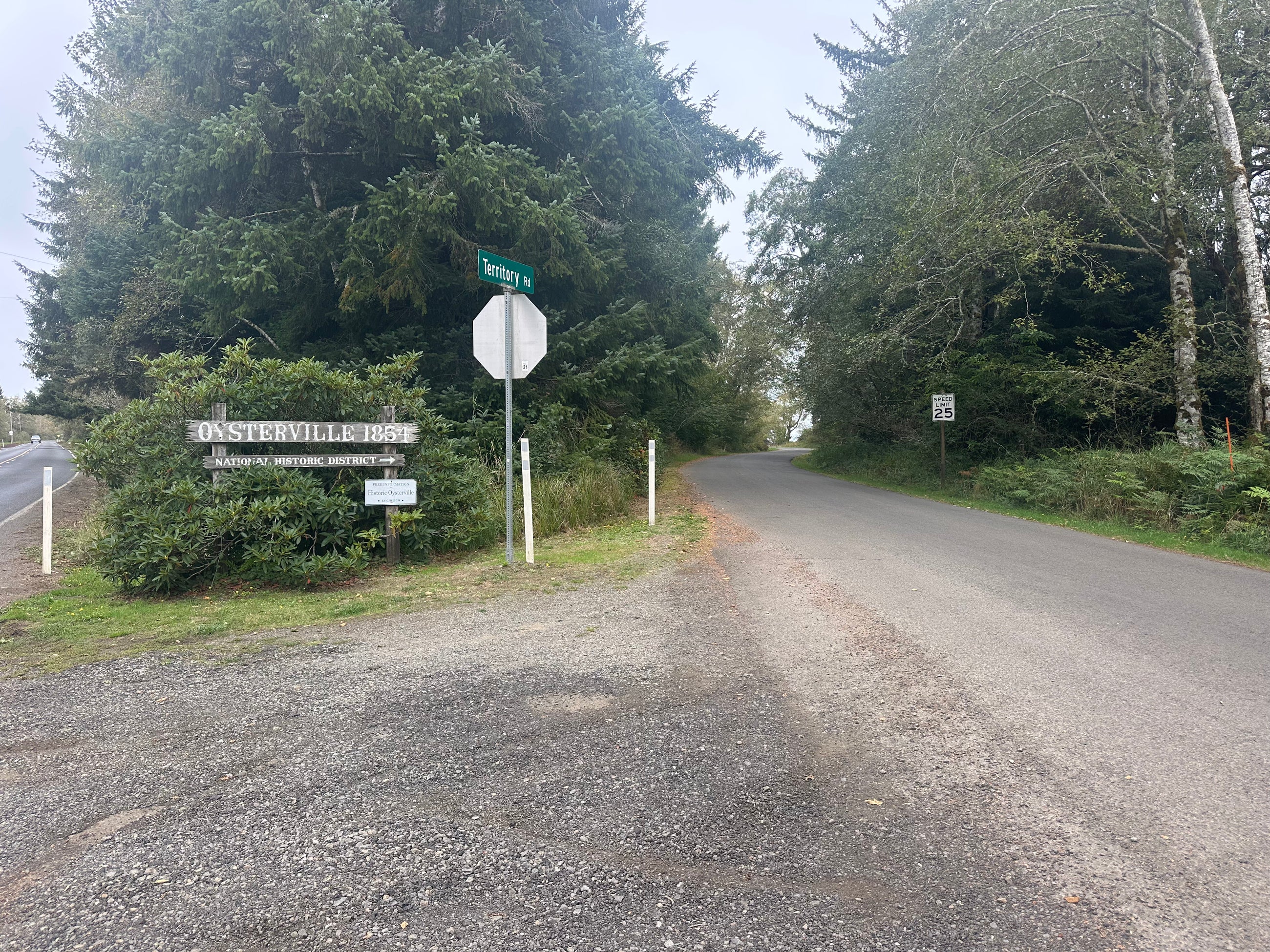
Historic Oysterville, Washington, along Territory Road

Oysterville, Washington

A Village Built on Oysters

More than 170 years after oysters created a town on the edge of Willapa Bay, they still connect Oysterville to the water.

At the end of the road is Oysterville

At the northern end of Washington's Long Beach Peninsula, a narrow road bends beneath old trees and passes weathered houses, picket fences and a small white church.

It can feel almost impossibly quiet today. But Oysterville was built because the water just beyond those houses held something extraordinarily valuable: oysters.

The village grew from the oyster beds of Willapa Bay. Oysters brought settlers, schooners, merchants and money. They helped make Oysterville the seat of Pacific County. They shaped its streets, supported its families and connected this remote edge of Washington Territory to San Francisco.

More than 170 years later, oysters still connect Oysterville to the bay.

Historic homes and trees along Territory Road in Oysterville, Washington

Before There Was Oysterville

Long before a town appeared here, people knew these waters.

Indigenous communities harvested shellfish from what was then commonly called Shoalwater Bay for generations before American settlement. The small native oyster growing naturally across the bay's shallow bottoms was part of that food system.

Today we call it the Olympia oyster, Ostrea lurida — the only oyster species native to the Pacific Northwest.

The oyster story of Oysterville therefore does not begin with Oysterville. It begins with the bay.

San Francisco Was Hungry

The California Gold Rush transformed the Pacific Coast. San Francisco grew rapidly, restaurants multiplied, and the city developed an appetite for oysters.

Hundreds of miles north, Shoalwater Bay held extensive natural beds. By the 1850s, schooners were coming north in search of them. Oysters harvested from the bay were carried to vessels and shipped down the coast to California.

Oysterville would become one of the settlements created by that trade.

The town was not built near an oyster industry. The oyster industry built the town.

Isaac Alonzo Clark and R.H. Espy

In 1854, Isaac Alonzo Clark and Robert Hamilton Espy came to this part of Shoalwater Bay.

Their arrival was not an act of discovery. Native people already knew these oyster grounds intimately. Historical accounts describe Native leaders guiding the newcomers to oyster beds that Indigenous communities had harvested for generations.

Clark and Espy recognized the commercial opportunity and entered the oyster trade. Clark's role went beyond harvesting oysters: he established his claim here and laid out and named the town that became Oysterville.

1863 survey plat of Oysterville, Washington
The original survey turns Oysterville from a story into geography: streets, blocks and the bay that explains why the town exists.

An Oyster Boomtown

Oysterville grew quickly. Oyster schooners anchored offshore. Harvesters worked the tides. Houses, stores and businesses appeared. The village acquired a school, newspaper, shops, saloons, hotels and other services expected of a growing frontier community.

In 1855, Oysterville became the seat of Pacific County. For nearly four decades, government on this remote stretch of Washington's coast operated from an oyster town.

What began as a settlement beside the oyster beds developed into a community.

Oysterville Church in its historic village landscape

A Town Becomes a Community

Buildings replaced cabins. Families put down roots.

The village that survives today reflects that transformation from oyster camp to community. The Oysterville Historic District is now listed on the National Register of Historic Places for its importance to settlement, commerce, industry and architecture.

These buildings are the physical remains of a town whose economy once began each day with the tide.

Historic architectural detail in Oysterville
Historic Oysterville schoolhouse

Oysterville is not a museum

The church, schoolhouse, homes, fences and roads can make Oysterville appear frozen in time. It isn't.

People still live here. Gardens grow. Houses change hands. Storms come through. The bay rises and falls beyond the trees.

Oysterville is a historic district, but it remains a living village.

A quiet residential scene in historic Oysterville

The Oyster That Built the Town Nearly Disappeared

The first Oysterville oyster industry depended on the native Olympia oyster. That abundance did not last.

During the second half of the nineteenth century, the native oyster industry declined dramatically. Intensive harvest was followed by environmental changes and habitat disruption across the Pacific Coast.

As the oyster trade weakened and transportation and commerce shifted elsewhere, the village lost much of the economic importance it had enjoyed during its boom years. The county seat eventually moved to South Bend in the early 1890s.

Oysterville became quieter. But its relationship with oysters was not over.

A Different Oyster Arrives

In the early twentieth century, oyster growers on the Pacific Coast began experimenting with another species: the Pacific oyster, Magallana gigas, originally from Asia.

It thrived in Willapa Bay. By the 1920s and 1930s, Pacific oysters were helping rebuild the region's oyster economy. Their arrival ultimately established the species that dominates commercial oyster farming in Willapa Bay today.

The Cannery at the Water's Edge

In 1921, the Sherwood family established an oyster operation and cannery on the Oysterville waterfront.

The property passed to Northern Oyster Company in 1939. In 1940, the cannery was substantially rebuilt or expanded, creating the building that largely defines the site today.

The names and businesses changed over the decades. The purpose of the place did not. Oysters continued moving between Willapa Bay and this building at the edge of Oysterville.

Oysterville through the 20th century

1921The Sherwood operation begins
1939Northern Oyster Company acquires the property
1940The cannery is substantially rebuilt or expanded
1976The Oysterville Historic District is listed on the National Register of Historic Places
Oysterville Sea Farms on the historic Oysterville waterfront
Today the property is Oysterville Sea Farms, part of Willapa Wild — still a working piece of Oysterville's oyster waterfront.

A Working Village on a Working Bay

Oyster farming remains part of everyday life around Oysterville and Willapa Bay.

The equipment has changed. The markets have changed. The science has changed. But much of the fundamental rhythm would be recognizable to generations of people who worked these waters before us.

We still plan around tides. We still watch the weather. We still work on the bay's terms.

Willapa Bay seen from Oysterville
The bay is not scenery behind the village. It is the reason the village is here.

The Native Oyster Comes Home

The Olympia oyster — the oyster that helped create Oysterville's first commercial boom — survives in Willapa Bay.

Willapa Wild is working to preserve and expand its presence. We do not sell Olympia oysters commercially. That is intentional.

Our objective is to protect them, learn from them and help increase their presence within the bay where they belong.

The Willapa Wild Way

History creates an obligation. If oysters built Oysterville, then the future of Oysterville's oyster culture depends on how we care for the bay that made it possible.

Our approach begins with a simple idea: leave the bay better than we found it.

That means farming without dredging. It means working within an ecosystem rather than treating the bay as a factory floor. It means paying attention to eelgrass, water quality, native oysters and the other species sharing this estuary. And it means measuring what we do instead of relying only on the language of sustainability.

The road still ends at the bay. The oysters are still here.

Understanding Oysterville Means Understanding the Bay

From the air, the relationship becomes obvious.

Oysterville sits on the protected eastern shore of the Long Beach Peninsula. Beyond it stretches Willapa Bay — an enormous estuary of channels, tide flats, eelgrass, islands and oyster grounds.

Indigenous harvest. The Olympia oyster. The California Gold Rush. Schooners. Oyster farms. Canneries. Families. Ecological change. Restoration.

They are all chapters of the same story. And they all lead back to the bay.

Come to Oysterville

Oysterville is still a place you can experience rather than simply read about.

Walk Territory Road through the historic district. Visit the church and schoolhouse. Look at the houses that remain from different eras of the village. Then keep going toward the water.

At Oysterville Sea Farms, you arrive at the working waterfront where Oysterville's oyster story continues.

Frequently Asked Questions About Oysterville

Where is Oysterville, Washington?

Oysterville is on the eastern shore of the Long Beach Peninsula in Pacific County, Washington, facing Willapa Bay. It is north of Ocean Park and near the northern end of the peninsula.

Why is it called Oysterville?

The village was named for the oyster industry that created it. Isaac Alonzo Clark laid out and named Oysterville during the settlement's early development in the 1850s.

Who founded Oysterville?

Isaac Alonzo Clark and R.H. Espy established an oyster business here in 1854 after being guided to oyster grounds long known and harvested by Indigenous people. Clark subsequently laid out and named Oysterville.

What kind of oyster originally grew at Oysterville?

The native oyster was the Olympia oyster, Ostrea lurida, the only oyster species native to the Pacific Northwest.

Can you visit Oysterville?

Yes. Oysterville is a living community as well as a historic district. Visitors can travel Territory Road, see historic structures and visit the working waterfront. Many historic homes are private residences and should be treated accordingly.

The History Matters Because the Future Does

Oysterville has already lived through more than one oyster era.

The native oyster created a boom. Its decline helped change the town. A new oyster rebuilt an industry. And today we understand something earlier generations could not fully see: the future of the oyster and the future of the bay are inseparable.

Oysterville's greatest value is not that it allows us to preserve the past exactly as it was. It allows us to see what happened here — what worked, what disappeared, what endured — and make better choices about what happens next.

The story of Oysterville is still being written.